
Table of Contents
- Understand Your Right to Dispute a Collection
- Identify Whether the Debt Is Actually Yours
- How Long Does a Debt Collector Have to Verify a Debt
- Write a Sample Letter Disputing a Debt That Is Not Yours
- Send Your Dispute in Writing and Keep Proof
- Dispute a Collection With Your Credit Bureau
- Handle Identity Theft and Debt Collection Disputes
- Follow Up and Track Your Dispute Timeline
- Frequently Asked Questions
Last Updated: October 21, 2026
Understand Your Right to Dispute a Collection
You have the legal right to dispute a collection that is not yours. This right exists under federal law, and debt collectors must respect it.
The Fair Debt Collection Practices Act (FDCPA) gives you specific protections. Within 30 days of receiving a written notice from a debt collector, you can request that they verify the debt. This means they must prove the debt is yours before they can continue collection efforts.
Many people don’t realize they have this power. If a collection account appears on your credit report and you didn’t create that debt, you can fight back. The process takes time and requires documentation, but it works.
At Miami Credit Fix, we help clients dispute collections. Proper documentation and written communication can be effective in challenging collection activity and removing inaccurate accounts from credit reports.
Write everything down. Keep copies of every letter, email, and document you send to a debt collector or credit bureau. This proof protects you if the collector ignores your dispute or violates your rights.
Identify Whether the Debt Is Actually Yours
Before you dispute a collection, confirm whether the debt truly belongs to you. This step prevents wasting time on debts that might actually be yours.
Check your credit report first. You can get a free credit report from each of the three major credit bureaus (Equifax, Experian, and TransUnion) once per year at AnnualCreditReport.com. Look for the collection account and review the details listed.
Ask yourself these questions:
- Do you recognize the original creditor’s name?
- Is the account amount close to what you might owe?
- Did you do business with this company?
- Is the account date accurate?
If the answer to most of these is no, the collection likely isn’t yours. Common reasons collections don’t belong to you include:
- Identity theft: Someone used your name or Social Security number to open an account
- Mistaken identity: The collector confused you with another person who has a similar name
- Errors by the original creditor: The creditor sold the debt to the wrong person
- Closed accounts reported as collections: An account you closed in good standing was incorrectly marked as a collection
Request your account information from the debt collector. Send a written letter asking them to provide the original account statements, payment history, and proof that they own the debt. This request counts as part of your 30-day dispute window.
How Long Does a Debt Collector Have to Verify a Debt
A debt collector has 30 days to verify a debt after you send a written dispute. This 30-day period starts when they receive your written notice requesting verification.
During these 30 days, the collector must stop most collection activity. They cannot report the debt to credit bureaus or pursue collection efforts while they investigate your dispute. However, they can still continue collection activity if they send you verification before the deadline.
What counts as adequate verification? The collector must provide documentation that proves:
- You owe the debt
- The amount listed is correct
- They have the legal right to collect it
Many collectors send vague responses that don’t actually verify the debt. If their response doesn’t include account statements, payment records, or a signed contract showing you created the debt, the verification is incomplete. In this case, you can challenge their response and ask for more complete documentation.
If a collector continues collection efforts after you’ve sent a written dispute and before they’ve verified the debt, they may be violating the FDCPA. Document everything and consider consulting a legal professional about your options.
Write a Sample Letter Disputing a Debt That Is Not Yours
A written dispute letter is your most powerful tool. Use this sample letter as a template, filling in your specific details:
[Your Name]
[Your Address]
[City, State ZIP]
[Your Phone Number]
[Your Email Address]
[Date]
[Debt Collector Name]
[Debt Collector Address]
[City, State ZIP]
RE: DISPUTE OF COLLECTION ACCOUNT
Account Number: [Account Number from notice]
Original Creditor: [Company name if known]
Dear [Debt Collector Name]:
I am writing to formally dispute the collection account listed above. According to my records, this debt does not belong to me, and I request that you verify this debt immediately.
I am requesting that you provide the following documentation:
- A copy of the original signed contract or agreement showing I created this debt
- Complete account statements showing the account history
- Proof that you have the legal right to collect this debt
- Documentation showing how you obtained this debt
I do not recognize this account, and I have no record of owing this debt. If you cannot provide verification within 30 days of receiving this letter, you must stop collection efforts and remove this account from my credit report.
Please send your written response to the address listed above. I am keeping copies of this letter and all supporting documentation.
Sincerely,
[Your Signature]
[Your Typed Name]
Customize this letter with your specific details. Use the exact account number from the collection notice. Name the original creditor if you know it. Be direct and factual. Don’t include emotional language or accusations.
Send Your Dispute in Writing and Keep Proof
Sending your dispute in writing creates a legal record. Phone calls don’t count. Emails might work, but certified mail is safest.
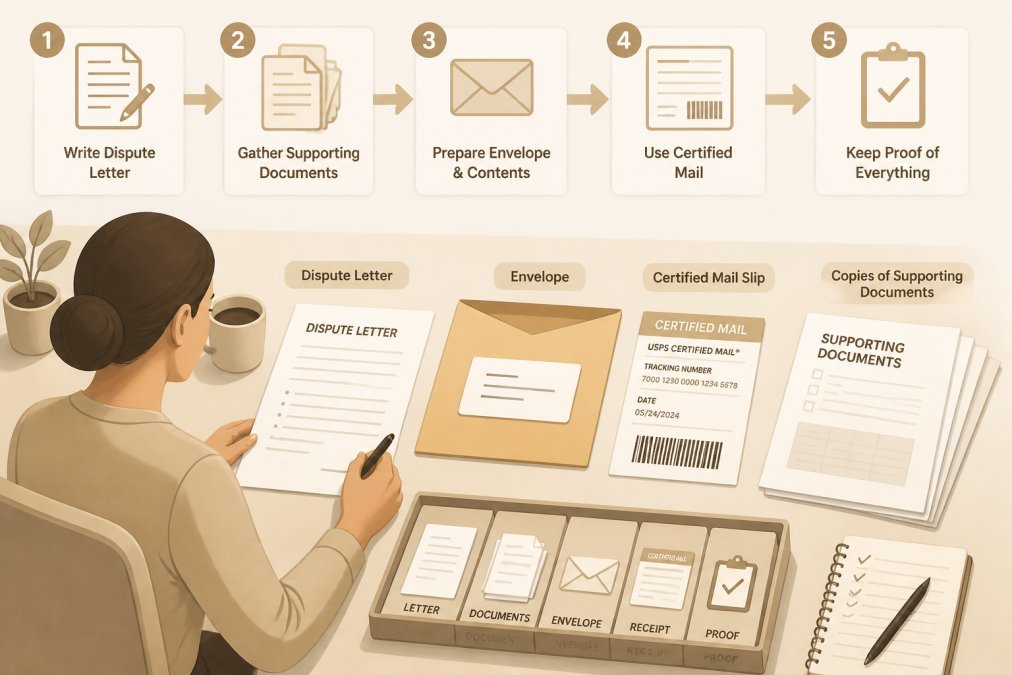
Use certified mail with return receipt requested. This gives you proof that the debt collector received your letter. Here’s how:
Free consultation with our credit expert. →
- Print your dispute letter
- Make three copies (one for the collector, one for your records, one for the credit bureau)
- Go to your local post office
- Request certified mail with return receipt
- Keep the receipt and the returned green card proving delivery
This small investment protects you by creating undeniable proof of when the collector received your dispute.
Also send a copy of your dispute letter to the credit bureaus where the collection appears. The credit bureaus must investigate disputes within 30 days and remove inaccurate information.
Keep all originals and copies in a folder. Label it clearly with the debt collector’s name and the date you sent the dispute. You may need this documentation later if the collector continues collection activity or if the account reappears on your credit report.
Certified mail with return receipt is your proof that the collector received your dispute. Without it, they can claim they never got your letter. The small cost is worth the protection.
Dispute a Collection With Your Credit Bureau
Disputing with a credit bureau is different from disputing with a debt collector. The credit bureau is the company reporting the account on your credit report. The debt collector is trying to collect the money.
Contact the credit bureau where the collection appears. You can dispute online, by phone, or by mail. The three major bureaus are:
- Equifax: equifax.com
- Experian: experian.com
- TransUnion: transunion.com
When you file a dispute with a credit bureau, tell them the account is not yours or the information is inaccurate. Provide specific details:
- The account number
- Why the information is wrong
- Any supporting documentation (proof of payment, identity theft report, etc.)
The credit bureau must investigate your dispute within 30 days. They contact the data furnisher (usually the debt collector or original creditor) and ask them to verify the information.
Many collections are removed during this process if the collector cannot provide adequate verification. The collector may have lost the original paperwork or may not have proper documentation that you created the debt.
Send your dispute to the credit bureau by certified mail, just like you did with the debt collector. Keep copies of everything. Some credit bureaus allow online disputes, but written disputes create better documentation.
Handle Identity Theft and Debt Collection Disputes
If someone used your name or Social Security number to create the debt, this is identity theft.
File an identity theft report with the Federal Trade Commission at IdentityTheft.gov. This creates an official record and gives you additional legal protections.
Include a copy of your identity theft report with your dispute letters to both the debt collector and credit bureaus.
Contact the original creditor directly. Explain that you’re a victim of identity theft and that someone fraudulently opened an account in your name.
Place a fraud alert on your credit report. This tells creditors to verify your identity before opening new accounts.
Consider a credit freeze if the identity theft is serious. This prevents anyone from opening new accounts in your name without your permission.
Document everything related to the identity theft. Keep copies of:
- The identity theft report
- Fraud alerts you placed
- Dispute letters you sent
- Responses from collectors and creditors
- Any police reports you filed
This documentation helps if you need to pursue legal action or if the collector violates your rights.
If you’re a victim of identity theft, monitor your credit report closely for months after resolving the collection. Fraudsters often create multiple accounts. Check your report at least quarterly to catch new fraud early.
Follow Up and Track Your Dispute Timeline
Create a timeline to track your dispute progress. This keeps you organized and ensures nothing falls through the cracks.
Here’s a sample timeline:
| Action | Date Sent | Date Received | Status |
|---|---|---|---|
| Dispute letter to collector | [Date] | [Date from receipt] | Awaiting verification |
| Dispute to credit bureau | [Date] | [Date from receipt] | Under investigation |
| Follow-up letter to collector | [Date] | [Date from receipt] | Pending response |
| Second dispute to credit bureau | [Date] | [Date from receipt] | Pending resolution |
Send a follow-up letter 35 days after your initial dispute if the collector hasn’t responded. Reference your original dispute letter and certified mail receipt number.
If the collector claims they verified the debt but didn’t provide adequate documentation, send another letter explaining why their response was incomplete. Request specific missing documents.
After 30 days, contact the credit bureaus if they haven’t removed the account. If they can’t provide evidence of investigation, file a complaint with the Consumer Financial Protection Bureau at CFPB complaint process.
Disputes can sometimes require multiple rounds of communication. Don’t give up after one response. Persistence can be effective.
Track the original account dates too. Some collections have statute-of-limitations deadlines. After a certain time period (usually 3-7 years depending on your state), the debt collector cannot sue you for the debt.
Disputing a collection that isn’t yours requires documentation, patience, and written communication. Our bilingual team understands the challenges of dealing with collections, especially medical debt that piles up unexpectedly. The Fair Debt Collection Practices Act protects your rights throughout this process.
Frequently Asked Questions
How can I dispute a collection that’s under my name but not mine?
Send a written dispute letter to the debt collector within 30 days of receiving their written notice. State clearly that the debt is not yours and request debt validation. Include copies of documents proving the account is not yours, such as identity verification, proof of payment from another source, or evidence of identity theft. The debt collector must respond within 30 days and either verify the debt or cease collection activity.
Should I dispute a collection with the debt collector or the credit bureau?
Dispute with both, but start with the debt collector. Send a written dispute to the collector within 30 days of their notice to trigger the verification requirement. Separately, dispute the collection with your credit bureau by submitting a dispute claim through their website or by mail. The credit bureau must investigate and respond within 30 days. Disputing with both creates multiple verification pathways and increases the chance of removal if the debt cannot be validated.
What evidence should I include when disputing a collection that is not mine?
Include documents that prove the account does not belong to you: government-issued ID, account statements from the original creditor showing someone else’s name, payment receipts proving you paid the debt elsewhere, credit reports showing the account under another person’s name, or a police report if identity theft is involved. Organize these documents clearly and keep copies for your records. The more specific documentation you provide, the stronger your dispute.
What happens if a debt collector does not respond to my dispute within 30 days?
If the debt collector fails to respond to your dispute or cannot provide adequate verification within 30 days, they must stop collection activity on that debt. You can then file a complaint with the Consumer Financial Protection Bureau or your state’s attorney general. You may also have grounds to dispute the account with the credit bureau as unverified. Document all dates and communications to support any follow-up action.