Last Updated: October 30, 2026
Quick Summary
There is no single credit score that qualifies you for a mortgage, since each loan program sets its own minimum and lenders may add overlays. Credit repair can help you reach the best-rate threshold, typically the upper 700s for conventional loans, which lowers your interest over the life of the loan.
- FHA loans allow scores as low as 500 with 10% down, and 580 or higher with 3.5% down.
- Lenders often use the middle of your three bureau scores, so review all three reports side by side.
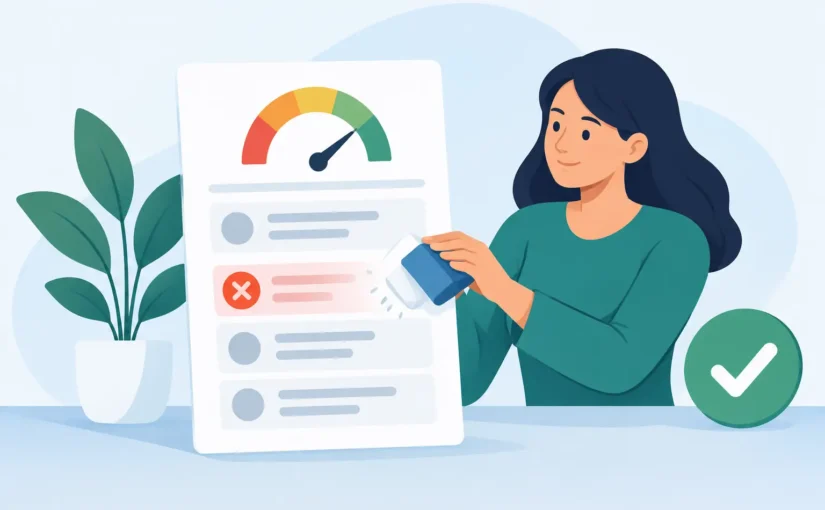
- Dispute errors first, since they are the fastest potential gain in your credit repair plan.
- Pay revolving balances down before the statement closing date, when the reported balance is set.
- Avoid opening new accounts or large purchases during the mortgage application window.
Table of Contents
- What Credit Score You Need to Qualify for a Mortgage in 2026
- How Mortgage Lenders Look at Your Credit Beyond the Score
- Credit Use Before Your Mortgage Application
- Finding and Disputing Mortgage Credit Report Errors
- How Long It Takes to Improve Credit for a Mortgage
- Credit Repair Scams, Your Legal Rights, and DIY Options
- Booking Your Free Consultation Before You Apply
- Frequently Asked Questions
What Credit Score You Need to Qualify for a Mortgage in 2026
There is no single credit score that qualifies you for a mortgage. Each loan program sets its own minimum, and individual lenders frequently impose overlays, extra requirements above the program floor. Understanding the difference between the minimum score to be eligible and the score that earns you a better rate is the first step in planning your credit repair.
Program Minimums vs. Best-Rate Thresholds
A minimum score gets your application considered. A higher score gets you a better price. Most lenders price conventional loans in tiers, with the sharpest rate reductions typically available once your middle score reaches the upper 700s. Below that, you may still qualify, but expect a higher rate or additional loan-level price adjustments.
- Conventional loans: Many lenders require a minimum middle score in the low 600s, though the best pricing usually starts in the upper 700s. Fannie Mae and Freddie Mac publish eligibility and pricing guidance that lenders follow. Fannie Mae selling guide on credit score requirements
- FHA loans: FHA program rules allow scores as low as 500 with at least 10% down, and 580 or higher with 3.5% down. Lenders may set higher minimums. HUD FHA single family housing policy handbook
- VA loans: VA does not set a minimum credit score, but most lenders do, commonly in the 600s. VA home loan credit requirements
- USDA loans: USDA does not publish a universal minimum, and lenders set their own requirements.
Why Your Middle Score Matters
Lenders often pull scores from all three national credit bureaus and may use the middle score. If one report contains an error or a maxed-out card, that weak report can drag down your middle score even when the other two look strong. Pull all three reports and review them side by side before you apply.
Loan-Specific Minimums Are Only the Starting Point
A common mistake is assuming the program minimum is the score you need. In practice, the score that gets you approved and the score that gets you a competitive rate are different numbers. A borrower with a lower score may qualify for a loan but pay a higher rate than a borrower with a stronger score on the same loan amount. That difference can add up over the life of the loan.
Aim for the best-rate threshold, not the program minimum. Raising your score toward the next pricing tier can lower the interest you pay over the life of the loan.
Before you start applying, read more about preparing your credit profile for a home loan so you know which score tier you are targeting.
How Mortgage Lenders Look at Your Credit Beyond the Score
A score is only one input. Underwriters also examine payment history, the age of your accounts, your revolving balances, your debt-to-income ratio, employment, and the size of your down payment. A search result on mortgage qualification makes the same point: credit is only part of the equation.
This matters because a higher score does not guarantee approval, and a modest score does not automatically rule you out. Lenders are also moving toward broader evaluation. Fannie Mae has made VantageScore 4.0 available to approved lenders for conventional delivery, and secondary research describes lenders assessing borrowers’ overall financial profiles. Fannie Mae lender announcements on credit score models
Credit Use Before Your Mortgage Application
Revolving balances carry more weight in the weeks before underwriting than most borrowers expect. High balances on credit cards push your use up, which can lower your score at exactly the moment a lender pulls it.
Consider paying balances down before the statement closing date, since that is typically when the reported balance is set. Avoid opening new accounts or making large purchases during the application window, since both can shift your profile right when it is being reviewed.
Finding and Disputing Mortgage Credit Report Errors
Errors on a credit report are common, and a single wrong late payment or a collection that should have been removed can cost you a better rate. Pull your reports from all three bureaus and check each line against your own records. You can get free reports through the federal government’s official site and dispute inaccuracies directly with the bureau reporting them.
Free consultation with our credit expert. →

Which Errors Matter Most to Underwriters
Not every error carries equal weight. Late payments, collections, judgments and accounts reported as open when they are closed tend to have the biggest effect on approval and pricing. Start there.
Keep your evidence organized before you file. Gather statements, payoff letters and correspondence that prove the item is wrong, and learn how to prepare documents for a credit dispute so the bureau has what it needs. For a step-by-step process, see how to dispute credit report errors in the U.S.
How Long It Takes to Improve Credit for a Mortgage
Timelines vary widely by starting profile, and no legitimate service can promise a specific score by a specific date. What you can do is match your repair plan to the type of problem dragging your score down. The table below gives realistic ranges based on common patterns; your results will depend on your full credit file.
Realistic Timelines by Starting Profile
| Starting situation | Typical action | Realistic timeline to see score movement |
|---|---|---|
| A single clear error (wrong late payment, duplicate collection) | Dispute with the bureau and provide documentation | 30-60 days after the bureau completes its investigation |
| High credit utilization (balances above 30% of limits) | Pay down balances before the statement closing date | Next reporting cycle, often 30-45 days |
| Recent late payments (30-60 days) | Bring the account current and make on-time payments | Several months of consistent on-time payments before the impact fades |
| Collection accounts or charge-offs | Pay, settle, or dispute if inaccurate; negotiate pay-for-delete only where permitted | 3-12 months depending on the item and lender guidelines |
| No credit history or thin file | Open a secured card or credit-builder loan and use it responsibly | 6-12 months to establish a score |
| Bankruptcy or foreclosure | Rebuild with on-time payments and low utilization | 1-4 years depending on the loan program and lender |
Why the Clock Starts Before You Apply
Mortgage underwriting does not wait. Lenders typically pull credit early in the application and may re-pull before closing. If a dispute is still open when underwriting reviews your file, the lender may require it to be resolved or may exclude the disputed account from the decision. Starting your repair work months before you apply gives you room to close disputes, let balances report lower, and build a clean payment record.
Do not open new credit accounts or make large purchases during the application window. A new inquiry or a jump in balances can change your score right when the lender is reviewing it.
A Practical Sequence
- Pull all three reports and list every item you believe is inaccurate.
- Dispute errors first, they are the fastest potential gain.
- Pay down revolving balances to below 30% of your limits, and ideally below 10%.
- Set every account to autopay so no payment is ever late.
- Wait at least one full reporting cycle after each change before assuming the score has updated.
If you are months away from a purchase, a realistic plan is more useful than a promise of quick results. For a step-by-step process, see how to dispute credit report errors in the U.S..
Credit Repair Scams, Your Legal Rights, and DIY Options
Credit repair companies can be legitimate, but the industry has attracted predatory operators. The Credit Repair Organizations Act limits what these companies can charge upfront and requires specific written disclosures, and you have the right to dispute errors yourself at no cost. Federal Trade Commission guidance on credit repair services
Be wary of any firm that promises to delete accurate negative information or asks for payment before performing services. Weigh professional help against doing the work yourself. Is credit repair legal, and what protections apply? and how professional repair compares with DIY credit help are worth reading before you decide.
Booking Your Free Consultation Before You Apply
Mortgage timing, score targets and dispute strategy all interact, so a personal review of your reports can save months. At Miami Credit Fix, we offer a free consultation with our credit expert to map out where your credit stands and what to address first. Our services are available in English and Spanish throughout the process, and we can review your options for repairing and rebuilding your credit before you commit to a loan application.
Frequently Asked Questions
How can I improve my credit before applying for a mortgage?
Start with the factors lenders weigh most: pay every account on time, lower revolving balances, and dispute any inaccurate items on your credit reports from Equifax, Experian and TransUnion. Mortgage lenders typically pull your credit at application and again before closing, so avoid opening new accounts or making large purchases on credit during the process. A credit repair consultation can help you prioritize which items to address first based on your specific report.
What credit score do I need to qualify for a mortgage in 2026?
Requirements depend on the loan program. Conventional loans, FHA loans, VA loans and USDA loans each set different minimums, and individual lenders often add their own overlays on top. Program rules can change, so confirm current requirements directly with an official HUD source or your lender. Ask a lender for the minimum score for the specific loan you plan to use.
How long does it take to repair credit before buying a house?
The timeline depends on your starting point. Removing a single error depends on how long the bureau takes to investigate, while rebuilding payment history after late payments or collections generally takes time. Planning well ahead of your application gives you room to correct problems and let positive history build. Your timeline will vary with the number and type of negative items on your reports.
Should I dispute errors before applying for a mortgage?
Yes. Errors such as incorrect balances, accounts that do not belong to you, or paid collections still reported as open can lower your score and affect underwriting. Review your reports from all three bureaus well before applying, because disputes can take weeks to resolve. Keep copies of supporting documents and tell your loan officer about any open disputes.
Can I qualify for a mortgage with late payments or collections?
Possibly, but it depends on how recent the late payments are, how many there are, and the loan program you choose. Lenders often look for a period of clean payment history before approval. Collections, judgments and recent late payments may require a written explanation or a longer waiting period. Speaking with a lender early helps you understand what applies to your situation.